Building a startup is exciting, but it can also be expensive, risky, and full of assumptions. Custom MVP software development helps you turn an idea into a focused first version of a product, so you can test real demand before investing in a full-scale platform. Instead of building everything at once, you build what matters most, learn from users, and improve with confidence.
What is a custom MVP, and why does it matter?
A custom MVP is a minimum viable product built around your specific business idea, users, and market goals. It includes only the essential features needed to solve a core problem, prove the value of the product, and collect meaningful feedback from early users.
The word “custom” matters because every startup has different priorities. A marketplace MVP does not need the same feature set as a healthcare app, fintech tool, SaaS dashboard, or consumer mobile app. Custom MVP development focuses on the smallest useful version of your product, not a generic template that forces your idea into someone else’s structure.
For founders, this approach creates a practical middle ground. You are not stuck with a slide deck or prototype that users cannot fully experience, but you are also not spending months building advanced features before knowing whether people actually want the product. A good MVP gives you enough functionality to test the riskiest assumptions: who the users are, what they need, how they behave, and whether the solution is compelling enough to keep improving.
The startup risk an MVP helps reduce

Most startup ideas begin with a strong belief: “People need this.” The challenge is that belief is not the same as evidence. Even smart founders with deep industry knowledge can misjudge pricing, onboarding, feature priorities, user behavior, or the real pain point behind a problem.
An MVP reduces that uncertainty by putting a working product in front of real users earlier. When users interact with a live version, they reveal things surveys and pitch conversations often miss. They may ignore a feature you thought was essential, struggle with a workflow that seemed obvious, or request something that changes your roadmap completely.
This is where custom mvp software development services become especially valuable. The right team does more than write code. They help translate a broad idea into a testable product strategy, define the first feature set, choose the right technology approach, and create a roadmap that leaves room for learning.
An MVP can help you reduce risk in several practical ways:
- Market risk: Do enough people care about this problem to try a solution?
- Product risk: Does the product actually solve the problem in a useful way?
- Technical risk: Can the product be built, scaled, and maintained with the chosen approach?
- Business risk: Does the MVP support a path toward revenue, funding, partnerships, or growth?
- Usability risk: Can users understand the product without hand-holding?
The goal is not to remove all risk. Startups always involve uncertainty. The goal is to make your next decision based on evidence rather than guesswork.
A strong MVP starts with a clear problem
Before you discuss features, screens, or technology, define the problem as clearly as possible. A vague problem leads to a vague product, and vague products are hard to test. A focused problem gives your MVP a clear purpose.
For example, “help small businesses manage operations” is too broad for an MVP. A sharper version might be, “help independent service providers manage booking requests and reduce missed appointments.” That second version points toward a specific audience, workflow, and measurable outcome.
A useful problem statement should answer four simple questions:
- Who is the product for? Be specific about the first user group, not every possible future customer.
- What problem do they face? Focus on a pain point they already recognize.
- Why does it matter now? Identify the cost of leaving the problem unsolved.
- What outcome should the MVP create? Define what success looks like for the user.
This clarity helps you avoid one of the most common MVP mistakes: building too many features too soon. When the core problem is clear, every feature can be judged by whether it directly supports the MVP’s purpose. If it does not, it can wait.
How do you decide what features belong in the MVP?
You decide MVP features by identifying the smallest set of capabilities required for users to complete the product’s core action and experience its main value. Anything that supports that core action belongs in the first version; anything that only makes the product more polished, automated, or expansive can usually move to a later phase.
A helpful way to think about this is to separate “must work” from “nice to have.” If you are building a booking app, users must be able to view availability, request or confirm a booking, and receive basic confirmation. Advanced analytics, loyalty rewards, custom themes, and multi-location reporting might be useful later, but they are not needed to prove the first version.
This is where experienced teams offering custom mvp development services can bring structure to the process. Founders often have a big vision, and that is a strength. But an MVP needs discipline. A development partner can help prioritize features based on user value, development effort, technical dependencies, and learning potential.
A practical MVP feature filter looks like this:
- Core user journey: What steps must the user complete to get value?
- Primary business goal: What action proves demand or progress?
- Feedback opportunity: What feature will teach us something important?
- Operational need: What does the team need to support early users manually or through simple admin tools?
- Build effort: Is the feature worth the time and cost at this stage?
The best MVPs often feel simple, but not careless. They are intentionally focused. Users should understand what the product does, complete the main task, and feel the value quickly.
Custom MVP app development for web and mobile ideas
Some MVPs work best as web applications, while others need mobile-first experiences. The right choice depends on user behavior, product context, and how people will access the solution in real life.
Custom MVP app development is often a good fit when the product depends on mobility, location, notifications, camera access, offline use, or frequent daily interaction. Examples might include delivery tools, wellness apps, field service platforms, social products, or on-the-go productivity apps. In those cases, the mobile experience is not just a design preference; it is part of the product’s usefulness.
A web-based MVP may be better for dashboards, B2B tools, admin-heavy workflows, marketplaces, internal platforms, or products that users are likely to access from a laptop. Web MVPs can also be faster to distribute because users do not need to download an app before trying the product.
Custom mvp app development services can help founders decide whether to build for iOS, Android, cross-platform mobile, web, or a staged combination. The key is to avoid choosing a platform simply because it feels trendy. Choose the format that gives early users the easiest path to value and gives your team the clearest path to learning.
The MVP development roadmap

A successful MVP is not just a smaller version of a final product. It is a structured process that turns uncertainty into decisions. While every product is different, most MVP projects follow a similar path.
1. Discovery and product definition
Discovery is where the idea becomes concrete. This stage usually includes clarifying the target audience, mapping the core user journey, defining business goals, reviewing competitors or alternatives, and identifying key assumptions.
The output should be a practical MVP scope, not a long wish list. By the end of discovery, the team should understand what the MVP must do, what it should not do yet, and what learning goals it needs to support.
2. User experience planning
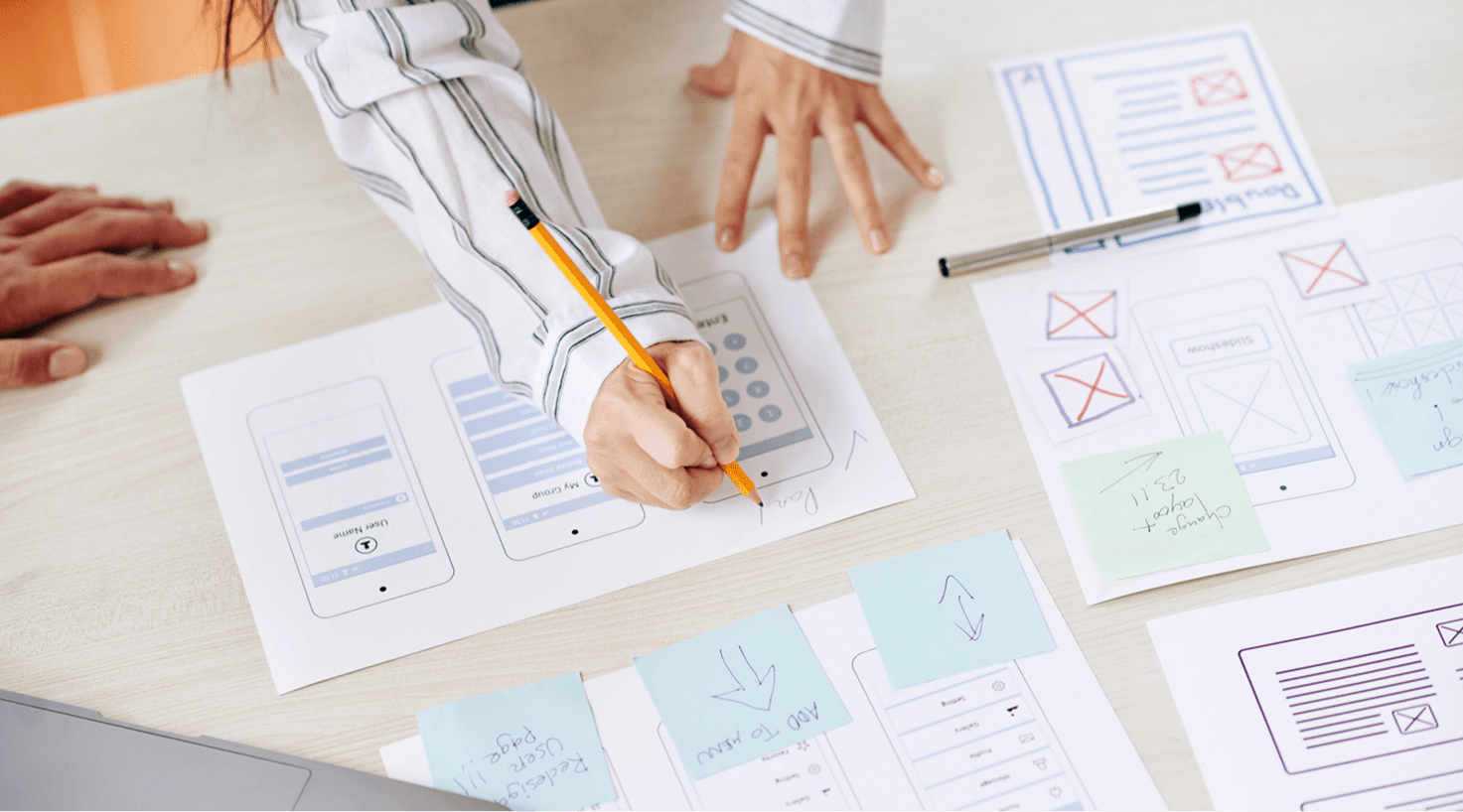
Before development begins, the user experience needs shape. Wireframes, user flows, and clickable prototypes can help the team visualize how users will move through the product.
This stage is especially useful because it reveals complexity early. A feature that sounds simple in conversation may require several screens, edge cases, or admin decisions. UX planning helps simplify the product before code is written, which can save time and reduce rework.
3. Technical architecture
The technical plan should match the MVP’s goals. You need a setup that is efficient enough for the first release but not so fragile that it blocks future growth.
This does not always mean choosing the most advanced technology. It means choosing tools, frameworks, integrations, and infrastructure that fit the product’s needs, team capacity, security expectations, and roadmap. Good custom mvp development solutions balance speed with maintainability.
4. Design and development
During design and development, the MVP becomes a working product. Designers focus on clarity, usability, and brand fit, while developers build the front end, back end, database, integrations, and admin features needed for launch.
Communication matters here. Founders should expect regular updates, opportunities to review progress, and clear decisions when trade-offs appear. The MVP phase moves best when the team stays focused on the agreed scope while remaining flexible about smarter ways to achieve the same goal.
5. Testing and launch preparation
Testing ensures the MVP is stable enough for real users. This includes checking core workflows, forms, user accounts, payment flows if relevant, notifications, performance basics, and compatibility across supported devices or browsers.
Launch preparation may also include analytics setup, onboarding content, support processes, and a feedback collection plan. The MVP should not launch into silence. You need a clear way to observe what users do and understand what they think.
6. Feedback, iteration, and growth planning
Once users start interacting with the MVP, the real learning begins. Feedback should be organized into patterns rather than treated as a list of random requests. Some comments will point to usability issues. Others may reveal missing features, unclear positioning, or a stronger customer segment than expected.
After launch, the product roadmap should be updated based on evidence. This is the stage where startups decide whether to refine the core product, add features, pivot the offer, improve onboarding, or prepare for a larger release.
Common MVP mistakes that slow startups down

Even with the right intentions, MVP projects can lose focus. Some teams try to impress investors by adding more features. Others rush development without enough discovery. Some build a product around internal assumptions and only talk to users after launch.
Here are common mistakes to avoid:
- Treating the MVP as a cheap final product: An MVP should be focused, but it still needs thoughtful planning, usable design, and reliable core functionality.
- Building for everyone: If the audience is too broad, the product becomes harder to position, test, and improve.
- Skipping user research: Even a small amount of user discovery can prevent expensive wrong turns.
- Prioritizing polish over learning: Beautiful details matter, but not more than proving the core value.
- Ignoring the admin side: Early teams often need simple internal tools to manage users, content, orders, approvals, or support.
- Choosing technology without a roadmap: Short-term speed is useful, but the wrong technical foundation can create problems later.
- Failing to define success metrics: If you do not know what you are measuring, it is hard to know whether the MVP worked.
The solution is not to overcomplicate the process. It is to stay honest about what the MVP is meant to prove.
What should you look for in an MVP development partner?
You should look for a partner who can help you think strategically, communicate clearly, and build a focused product that supports learning. Strong development skills are essential, but the best fit is usually a team that understands startup constraints and can guide trade-offs without losing sight of your larger vision.
When evaluating custom mvp development partners, pay attention to how they approach the early conversation. Do they ask about users, business goals, and assumptions? Do they challenge unnecessary features respectfully? Do they explain technical decisions in plain language? These signals matter because MVP development is collaborative.
A good partner should help with:
- Product strategy: Turning the idea into a clear MVP scope and roadmap.
- UX and design: Making the product easy to understand and use.
- Engineering: Building stable, maintainable software with the right technical choices.
- Launch readiness: Preparing analytics, testing, deployment, and feedback loops.
- Iteration: Helping decide what to improve after real users respond.
It is also worth discussing communication style before the project starts. Ask how updates are shared, how decisions are documented, how scope changes are handled, and what involvement is expected from you as the founder. Clear working habits can make the difference between a smooth MVP and a stressful one.
Turning feedback into a better product
Launching an MVP is a milestone, but it is not the finish line. The most valuable part of the process is what happens after users engage with the product. This is when your roadmap should become more evidence-based.
Feedback can come from interviews, support messages, analytics, session recordings, surveys, sales conversations, and user behavior inside the product. The important thing is to look for patterns. One user request may be interesting, but repeated friction around the same workflow is a signal worth investigating.
Organize feedback into categories:
- Usability issues: Where are users confused, blocked, or dropping off?
- Value gaps: What did users expect the product to do that it does not yet do?
- Feature requests: Which requests support the core problem, and which are distractions?
- Positioning insights: Are users describing the value differently than you are?
- Growth opportunities: Which user segments are most engaged or easiest to convert?
This feedback loop helps prevent reactive development. Instead of adding every requested feature, you can improve the product in a way that strengthens the core experience and supports business goals.
A practical checklist before you build
Before investing in custom mvp software development, take time to prepare. You do not need every detail finalized, but the clearer your thinking is, the better your development team can help.
Use this checklist as a starting point:
- Define the target user group for the first release.
- Write a simple problem statement in one or two sentences.
- Identify the core action users must complete to experience value.
- List must-have features separately from future enhancements.
- Decide what success should look like after launch.
- Gather examples of products, workflows, or design styles you like.
- Note any compliance, security, payment, or integration needs.
- Plan how you will recruit early users or beta testers.
- Decide how feedback will be collected and reviewed.
- Set expectations for budget, timeline, and post-launch iteration.
This preparation does not replace discovery, but it makes discovery more productive. It gives the team a foundation to challenge, refine, and turn into a workable plan.
The real value of building lean
The biggest benefit of an MVP is not simply saving money. It is creating a smarter path from idea to product-market learning. When you build lean, you give yourself permission to adapt before your product becomes too large, too expensive, or too rigid to change.
Custom MVP development solutions are useful because they keep the startup journey grounded. You can still think big, but you build in stages. You can still move quickly, but you avoid rushing blindly. You can still create something impressive, but the product is impressive because it solves a real problem, not because it has the longest feature list.
For many founders, this mindset is a shift. The first version does not need to prove that every future feature is possible. It needs to prove that the product deserves a future.
Final takeaway
Custom MVP software development gives startups a practical way to test ideas, learn from users, and build momentum without overcommitting too early. By focusing on the core problem, choosing the right first features, and working with a thoughtful development partner, you can launch a product that supports real decisions instead of assumptions.
Whether you are planning custom mvp app development for a mobile-first idea or a web-based platform for a specific business workflow, the principle is the same: start focused, learn quickly, and improve with purpose. A successful startup rarely begins with a perfect product. It begins with a useful first version and the discipline to keep making it better.