UX Audit

Find the Friction, Improve the Experience

We identify usability issues in key user journeys and turn them into clear, prioritized improvements.
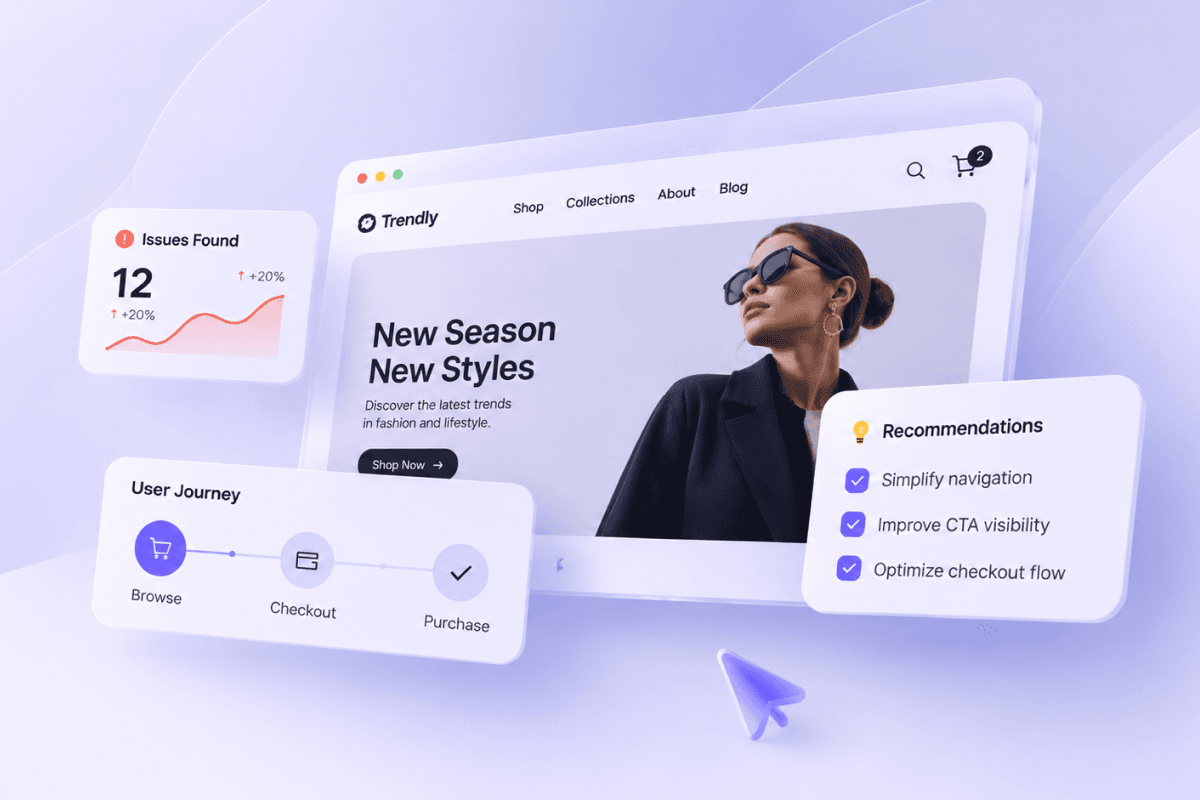
UX Audit
We review
Usability, user journeys, interface clarity
We use
Product data, expert evaluation, user research
You get
Prioritized findings, actionable recommendations, a practical improvement plan
For
Websites, web applications, mobile products

What We Review

The Experience, from First Visit to Key Task

  • 01

    Navigation and Information Structure

    We review how content and features are organized, whether labels and categories are clear, and how easily users can find what they need and move through the product.

  • 02

    Interface Clarity and Consistency

    We assess visual hierarchy, layout, interaction patterns, and system feedback across important screens and states to identify confusing or inconsistent experiences.

  • 03

    Key User Journeys

    We examine important tasks from beginning to end, identifying unnecessary steps, unclear decisions, errors, and points where users may struggle or abandon their journey.

  • 04

    Product Evidence and User Context

    We use available analytics, user feedback, research findings, and team knowledge to understand where problems occur, who they affect, and how they relate to product and business goals.

How the Audit Works

From Identifying Problems to Defining What to Improve

  1. Stakeholder Alignment

    Define the goals and scope of the audit

    We start by learning about your product, business priorities, users, and the challenges your team wants to address. This helps us agree on the most important areas to investigate and define what a successful audit should deliver.

    Key steps

    • Understand business goals and product priorities
    • Identify known user concerns and problem areas
    • Review existing research, metrics, and feedback
    • Define the audit scope, focus areas, and success criteria

    Deliverables

    Stakeholder summaryAgreed audit scopeInitial evaluation priorities
  2. Product Data and Evidence Review

    Find signals in product data and user feedback

    We examine the evidence already available to your team, including analytics, user feedback, support requests, and previous research. These signals help us identify patterns, locate potential friction points, and decide where deeper investigation is needed.

    Key steps

    • Review available product analytics and tracking data
    • Identify drop-offs and patterns in important user flows
    • Examine recurring support issues and user feedback
    • Review existing research and identify evidence gaps

    Deliverables

    Product evidence summaryPotential friction areasPriorities for further investigation
  3. User and Market Research

    Understand users and the context around your product

    We build a clearer picture of your users, their needs, and the context in which they use your product. Depending on the project, this may involve reviewing existing research, conducting user interviews, or examining relevant competitor experiences and industry patterns.

    Key steps

    • Review target audiences and existing user insights
    • Conduct user interviews when needed
    • Examine relevant competitor experiences
    • Identify user expectations, recurring needs, and opportunities

    Deliverables

    User insights summaryInterview findingsCompetitor and market observations
  4. User Journey and Usability Analysis

    Evaluate key screens against usability principles

    We review key screens and interaction states against established usability principles. We assess navigation, information hierarchy, consistency, accessibility basics, and system feedback to identify issues that may make the experience confusing or difficult to use.

    Key steps

    • Evaluate information architecture and navigation
    • Assess visual hierarchy and content clarity
    • Review interaction patterns and system feedback
    • Identify consistency, accessibility, and error-handling issues

    Deliverables

    Heuristic evaluation findingsAnnotated screen examplesDocumented usability issues
  5. Action Planning

    Turn findings into a clear improvement plan

    We translate prioritized recommendations into a clear sequence of next steps. The plan helps your team understand what to address, why it matters, and how design and product improvements can move forward.

    Key steps

    • Organize recommendations by priority
    • Define suggested design and product actions
    • Identify dependencies and open questions
    • Suggest relevant success measures for tracking improvements
    • Outline possible next steps for implementation

    Deliverables

    UX audit reportPrioritized improvement roadmapRecommended next steps

FAQ

Questions about a UX Audit

We're here to bring your ideas to life.

Let’s start
© youx Studio 2017 - 2026
UX Audit | youx Studio